
Caen Memorial
The City of History for Peace, a site not to be missed…
There are places that, by their very existence, carry a universal message. The Caen Memorial is such a place. Much more than a museum, it is a place of memory, reflection and hope, erected where history has left its deepest scars. To visit the Memorial is to allow yourself to be traversed by one of the darkest and most decisive pages of the 20th century, in order to better understand the world in which we live today.
Caen, a martyred city
To understand the birth of the Memorial, we must first remember what Caen went through. In the summer of 1944, the Normandy capital was subjected to bombardments of unprecedented violence. For over two months, the city was the scene of fierce confrontations between German and Allied forces, leaving behind a landscape of ruins and thousands of civilian casualties. Caen, martyred city of the Liberation, bore in its devastated stones the memory of an immense sacrifice. It was unthinkable that this tribute should not be commensurate with what it had endured.
As early as 1969, Jean-Marie Girault, future mayor of Caen, put forward the idea of a museum dedicated primarily to the Second World War. An ambitious project, carried forward for almost twenty years, it finally culminated in the inauguration of the Caen Memorial on June 6, 1988, in the presence of French President François Mitterrand, for the 44th anniversary of the D-Day landings. A symbolic date, carefully chosen as a solemn echo of history.
A journey through the 20th century
The Memorial offers a number of chronological and thematic itineraries to guide visitors from the origins of the Second World War to the end of the Cold War. From the origins of the conflict to the dark hours of the Occupation, from the Resistance to the D-Day landings of June 6, 1944, from the Liberation of Europe to the reconstruction of the post-war world, each stage is told with rare historical rigor and emotional force. Archives, first-hand accounts, period films, reconstructions and authentic objects plunge visitors into the heart of a history that is both collective and profoundly human. A journey that will appeal to adults and younger generations alike.
A site full of symbols
The Memorial’s location is by no means insignificant. The building was constructed on thevery site of the command bunker of German General Wilhelm Richter, who on June 6, 1944, from this post, coordinated the German resistance to the Anglo-Canadian troops landing on the nearby beaches. To build a place of remembrance and peace on the remains of a wartime center: the symbolism is strong, almost dizzying.
Gardens as a living tribute
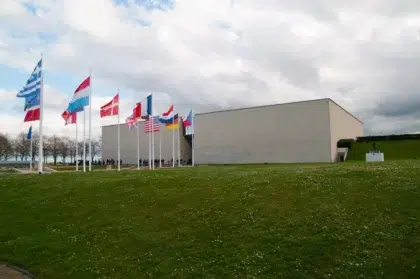
The Memorial is not limited to its inner walls. It opens onto a vast 35-hectare garden, divided into three distinct areas that pay tribute to the nations that paid the blood price for the Liberation: the American garden, the Canadian garden and the British garden. These green and contemplative spaces are an invitation to contemplation, gratitude and remembrance. Soothing places where nature itself seems intent on honoring the memory of those who did not return.
A visit to the Caen Memorial is a must for anyone wishing to understand the history of the 20th century and the fragile price of peace.
For more information, click here.